
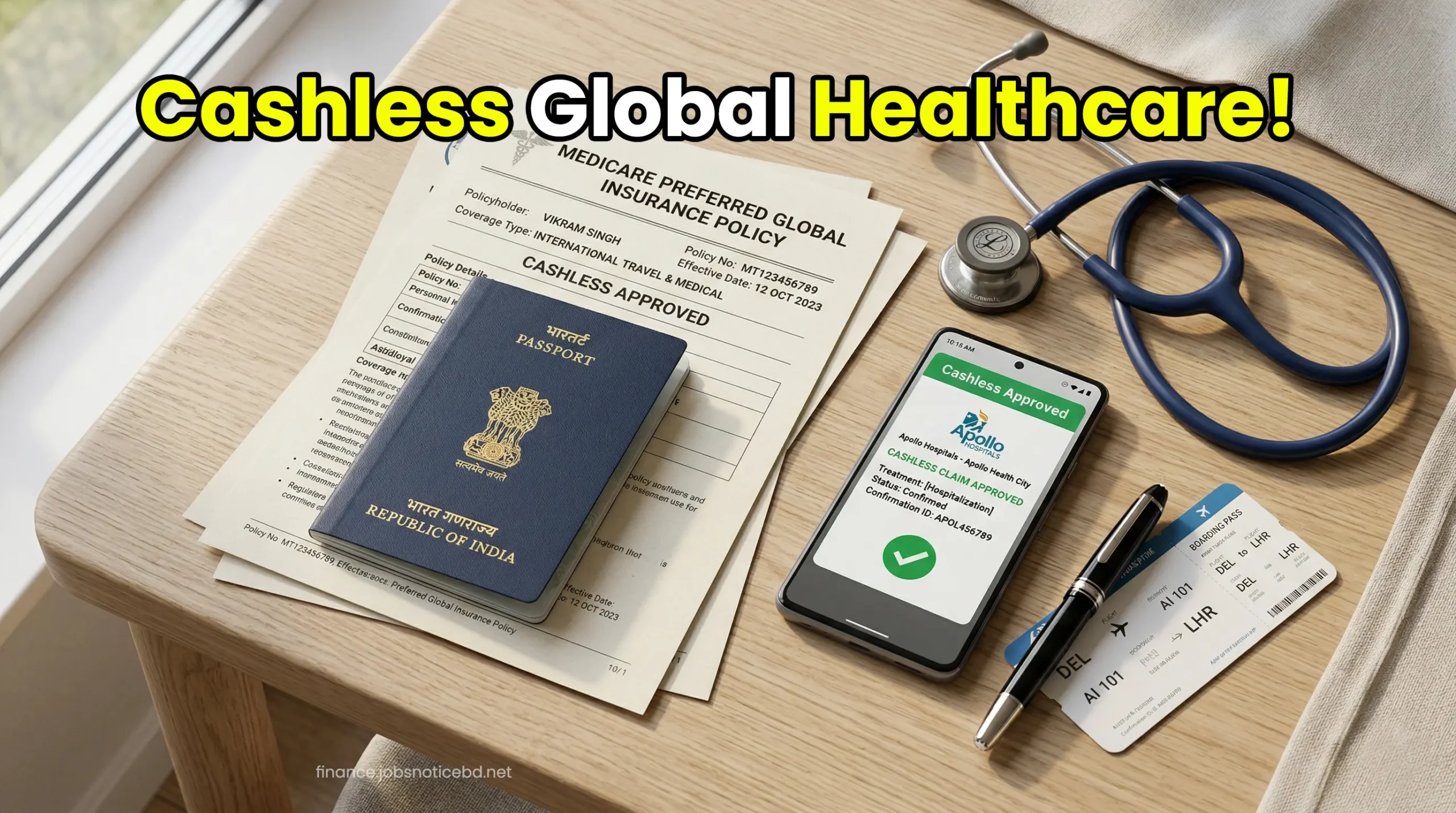
A sudden medical emergency in a foreign country is a traveler’s absolute worst nightmare. Beyond the immediate physical trauma, the sheer financial devastation of international healthcare can permanently cripple your family’s savings. In countries like the United States or Switzerland, a minor surgical procedure or a brief ICU stay can effortlessly exceed $50,000. To survive this financial minefield, securing a travel insurance policy that explicitly guarantees global cashless hospitalization is not a luxury; it is a critical necessity.
Smart Finance Disclaimer: The insurance providers, network coverage limits, and TPA (Third Party Administrator) processes detailed in this guide are for educational purposes and based on 2026 data. Policy inclusions, geographical exclusions, and cashless approval rates fluctuate constantly. Always read the exhaustive legal policy wording and verify the global hospital network directly with the insurer before traveling.
A true cashless policy means your Indian insurance provider pays the foreign hospital directly. You are not required to liquidate your personal savings, max out your credit cards, or desperately arrange emergency wire transfers from India to secure a hospital bed.
Avoid “Reimbursement-Only” policies. These require you to pay the entire massive hospital bill out of your own pocket upfront. You must then file a complex claim upon returning to India and wait months, hoping the insurer approves the refund.
The success of a cashless claim depends entirely on contacting the Third Party Administrator (TPA) immediately. Most policies legally mandate that you must inform their international toll-free emergency number within 24 to 48 hours of hospitalization.
The Financial Catastrophe of Overseas Healthcare
Many Indian travelers significantly underestimate the cost of healthcare outside of the subcontinent. While India offers high-quality medical care at relatively affordable rates, Western healthcare operates on a fundamentally different economic model. A simple ambulance ride in New York City can cost $1,500, before you even see a doctor.
If you lack proper insurance, foreign hospitals will demand upfront payment or massive financial guarantees before rendering non-life-saving treatment. While holding a zero forex markup travel card is excellent for daily shopping, its balance will instantly evaporate if used to clear an international hospital invoice.
Furthermore, if you are forced to use standard Indian credit cards to pay for emergency medical bills, you will simultaneously trigger predatory banking penalties. The sudden financial shock will be compounded by the hidden forex markup charges and 18% GST added by your home bank for executing such massive foreign transactions.

How Global Cashless Networks Operate
Indian insurance companies do not possess physical offices in every global city. Instead, they rely on massive international networks known as Third Party Administrators (TPAs). Prominent global TPAs include companies like Europ Assistance, AWP (Allianz), and Falck Global Assistance.
When you arrive at a foreign hospital, you must present your insurance certificate and immediately call the TPA’s local toll-free number. The TPA acts as the crucial bridge. They verify your policy validity, assess the medical diagnosis provided by the foreign doctor, and issue a “Guarantee of Payment” (GOP) directly to the hospital’s billing department.
Once the GOP is officially issued, the hospital treats you as a fully funded patient. Upon your discharge, the hospital sends the final invoice to the TPA, who settles the debt using funds from your Indian insurer. You simply walk out of the hospital and continue your journey.

Top Insurance Providers for Cashless Treatment
Not all travel insurance policies are engineered equally. Some budget policies aggressively market high coverage limits but completely lack the underlying TPA infrastructure to actually execute a cashless transaction in a crisis. You must select providers with proven global operational capabilities.
This becomes especially critical when traveling to regions with strict visa mandates. For instance, obtaining the best senior citizen Schengen insurance requires explicitly proving to the European embassy that your policy offers a minimum of €30,000 in coverage, including emergency repatriation.
| Insurance Provider | Global TPA Partner | Key Cashless Advantage |
|---|---|---|
| Tata AIG Travel Guard | AIG Travel Assist (In-House) | Massive global hospital network and rapid GOP issuance. |
| Care Health (Explore) | Europ Assistance | Zero sub-limits on premium plans, maximizing cashless utility. |
| Bajaj Allianz | AWP Assistance | Highly reliable for corporate and high-net-worth medical evacuations. |
| ICICI Lombard | UnitedHealthcare Global | Extensive reach and direct billing specifically within the USA. |
Never assume the complimentary travel insurance attached to your premium credit card provides genuine cashless medical hospitalization. While credit cards offer decent coverage for flight delays or lost luggage, their built-in medical limits are notoriously low and frequently default to a slow, painful reimbursement model. Always purchase a dedicated, standalone health policy from a specialized medical insurer before boarding your international flight.
Navigating Deductibles and Sub-Limits
Even with a premium cashless policy, you must rigorously analyze the fine print regarding Deductibles and Sub-limits. A deductible is the initial fraction of the hospital bill that you are legally required to pay out of your own pocket before the insurance company takes over the remaining balance.
For example, if your policy features a $100 deductible and the total emergency room bill is $2,000, you must pay the foreign hospital $100. The TPA will then issue a cashless guarantee for the remaining $1,900. Always opt for policies with minimal or zero deductibles, even if the upfront premium is slightly higher.
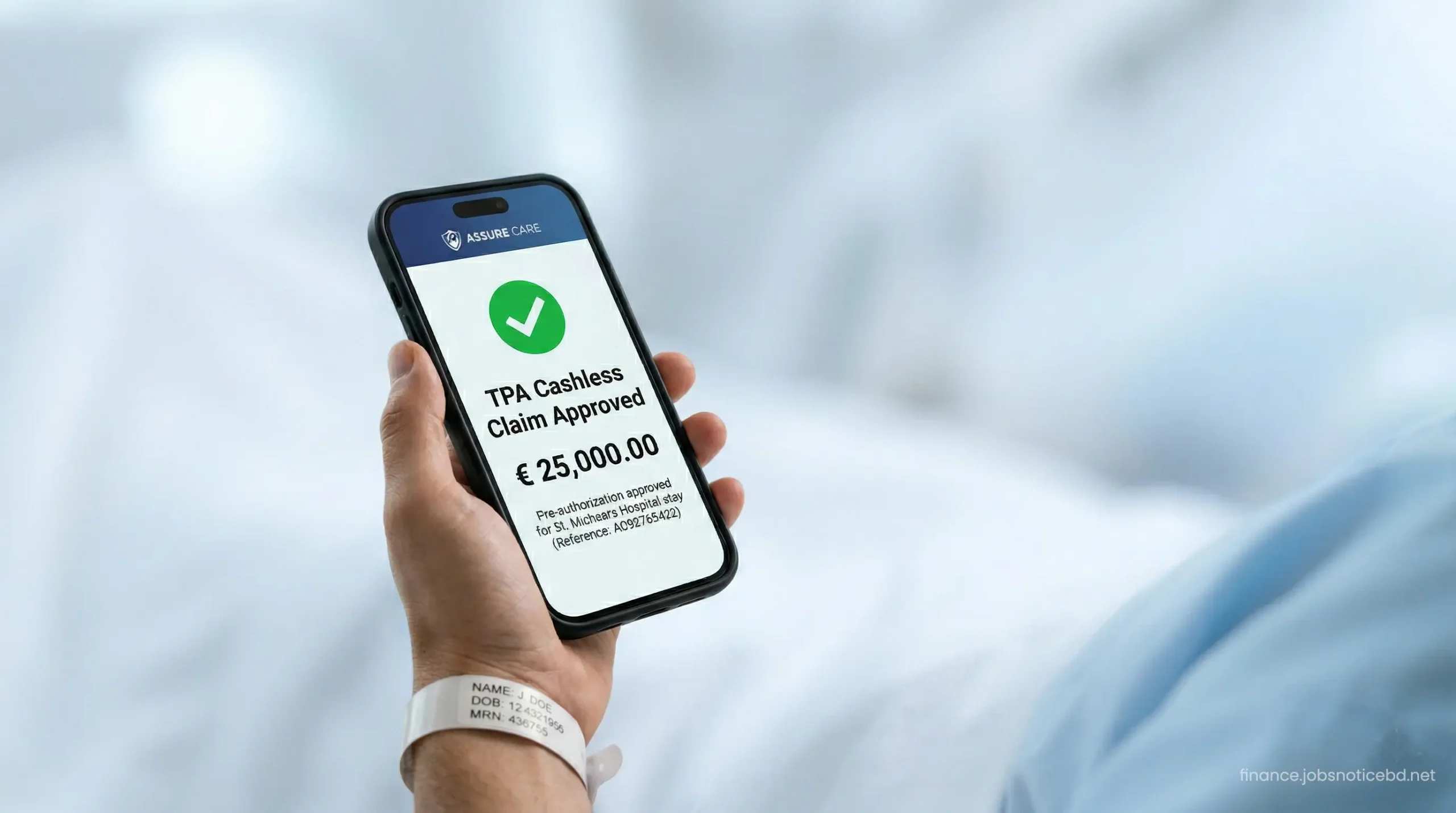
Sub-limits are far more dangerous. A sub-limit is a restrictive clause where the insurer caps the maximum payout for a specific medical procedure, regardless of your total overall sum insured. If you have a $500,000 policy but it contains a $2,000 sub-limit for ambulance services, any ambulance bill exceeding that specific limit becomes your personal liability. Elite policies completely remove these restrictive sub-limits.
| Policy Feature | Standard Budget Policy | Premium Cashless Policy |
|---|---|---|
| Settlement Method | Reimbursement Only | Direct Cashless to Hospital |
| Deductible Rate | High ($100 to $250) | Zero or Very Low ($50) |
| Per-Procedure Sub-Limits | Yes (Severely restricts payouts) | None (Full sum insured available) |
| Pre-Existing Disease (PED) | Strictly Excluded | Covered (Life-threatening emergencies) |
Corporate Liability and Employee Travel
For Indian businesses sending executives abroad, providing bulletproof cashless medical insurance is a legal and moral imperative. If an employee suffers a catastrophic health crisis during an international assignment, the company is ultimately liable for their well-being.
While the finance department focuses heavily on optimizing daily expenses via the best corporate travel credit cards, HR must ensure those corporate trips are shielded by elite commercial health policies. A corporate-grade insurance plan provides instantaneous VIP cashless approvals, ensuring the employee receives immediate critical care without the company having to wire massive emergency funds across borders.
Securing Your Global Health Strategy
International travel is an incredible investment in human experience, but it must be protected by an impenetrable financial shield. Attempting to save a few thousand rupees by purchasing an inferior reimbursement policy or relying on basic credit card coverage is a gamble with your life savings.
Prioritize insurers with colossal TPA networks, demand zero sub-limits, and fiercely protect your capital. When you step onto foreign soil equipped with a guaranteed cashless medical policy, you eliminate the underlying anxiety of the unknown. You can explore the globe with absolute peace of mind, knowing that if disaster strikes, your health and your wealth are perfectly secure.
Frequently Asked Questions (FAQ)
1. What happens if I visit a foreign hospital that is not in the TPA’s network?
If you visit an out-of-network hospital in an extreme emergency, the TPA will still attempt to negotiate a direct billing agreement with them. However, if the hospital refuses, you will have to pay out of pocket and file for reimbursement later. Always call the TPA first; they will direct you to the nearest network hospital.
2. Can a cashless claim be rejected by the insurance company?
Yes. The most common reason for a cashless rejection is hiding a Pre-Existing Disease (PED) during policy purchase. If the foreign doctor determines your emergency was triggered by an undeclared condition like high blood pressure, the TPA will instantly revoke the Guarantee of Payment.
3. Does cashless travel insurance cover outpatient department (OPD) visits?
Standard travel insurance policies are designed for emergency inpatient hospitalization (admitted for more than 24 hours). Simple OPD visits for a minor cold or a quick doctor consultation usually require you to pay upfront and claim reimbursement, subject to the policy deductible.
4. Will my insurance pay for my flight back to India if I am severely injured?
Yes, provided your policy includes “Emergency Medical Evacuation and Repatriation.” If the local foreign hospital cannot treat your condition, or if you need to be flown back to India under medical supervision, the TPA will arrange and fully fund the specialized medical flight.
5. Who do I call first in a medical emergency: the local ambulance or the TPA?
Your physical health is the absolute priority. Call the local emergency services (like 911 in the US or 112 in Europe) immediately. Once you are stabilized or in transit to the hospital, you or a traveling companion must call the TPA’s toll-free number to initiate the cashless billing process.