
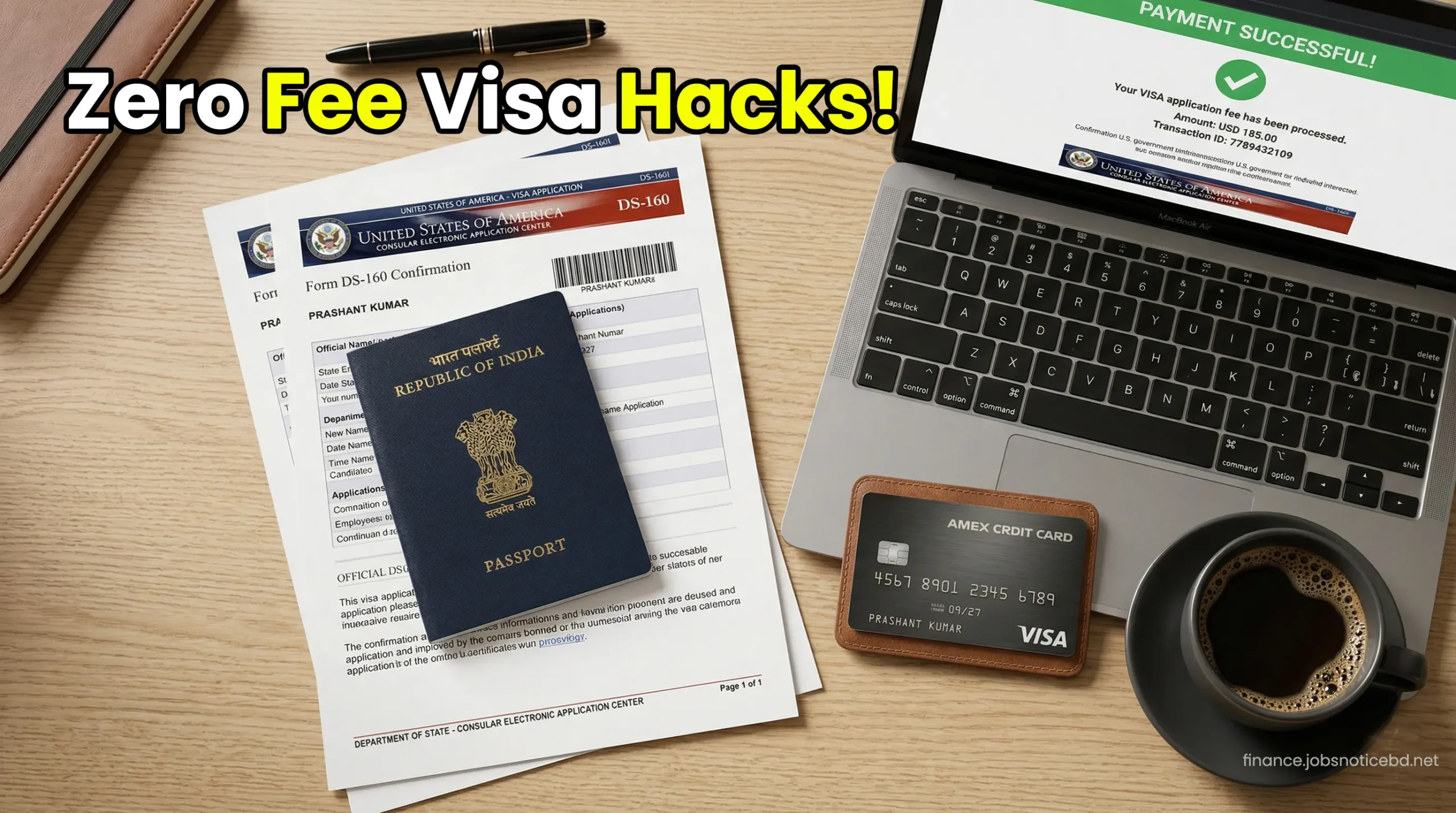
Securing a United States visa is a meticulous and often stressful process for Indian citizens. However, before you even reach the interview stage, you face your first major hurdle: the application fee. The B1/B2 tourist visa currently costs $185. Paying this exact USD amount from an Indian bank account often triggers a cascade of hidden currency conversion fees, silently inflating your travel budget.
Smart Finance Disclaimer: US embassy visa fees, acceptable payment methods, and consular exchange rates change frequently without prior public notice. The financial strategies and fee structures detailed in this guide are strictly for educational purposes. Always verify the exact INR equivalent and authorized payment options directly on the official CGI Federal portal before transferring any funds.
⚡ Quick Bites (The Zero-Fee Strategy)
The absolute cheapest and safest method to pay your US visa fee from India is through National Electronic Funds Transfer (NEFT). This domestic bank-to-bank transfer completely bypasses international credit card networks and eliminates all foreign transaction markups.
⚡ Quick Bites (The Consular Rate Trap)
The US Embassy determines its own internal exchange rate, known as the Consular Exchange Rate. Do not calculate your payment using the live Google exchange rate. If you transfer the wrong INR amount, your payment receipt will be permanently rejected.
⚡ Quick Bites (Receipt Activation Time)
Visa fee payments are rarely instantaneous in India. Depending on your chosen payment method, it can take anywhere from 2 hours to 2 business days for your unique receipt number to activate, allowing you to finally schedule the interview.
Understanding the CGI Federal Payment System
The US Embassy in India utilizes a third-party contractor, CGI Federal (ustraveldocs), to manage the visa application scheduling and payment collection ecosystem. When you create your profile and reach the payment screen, you are not simply entering a credit card to pay $185. You are navigating a localized payment gateway designed to collect Indian Rupees.
Because the fee is pegged to the US Dollar but collected in Indian Rupees, the embassy sets a rigid “Consular Exchange Rate.” This rate is periodically adjusted but generally sits slightly higher than the live mid-market rate to protect the embassy against sudden currency depreciation. You must pay the exact INR amount dictated by this specific consular rate on the day of your transaction.
Method 1: Electronic Funds Transfer (NEFT/RTGS)
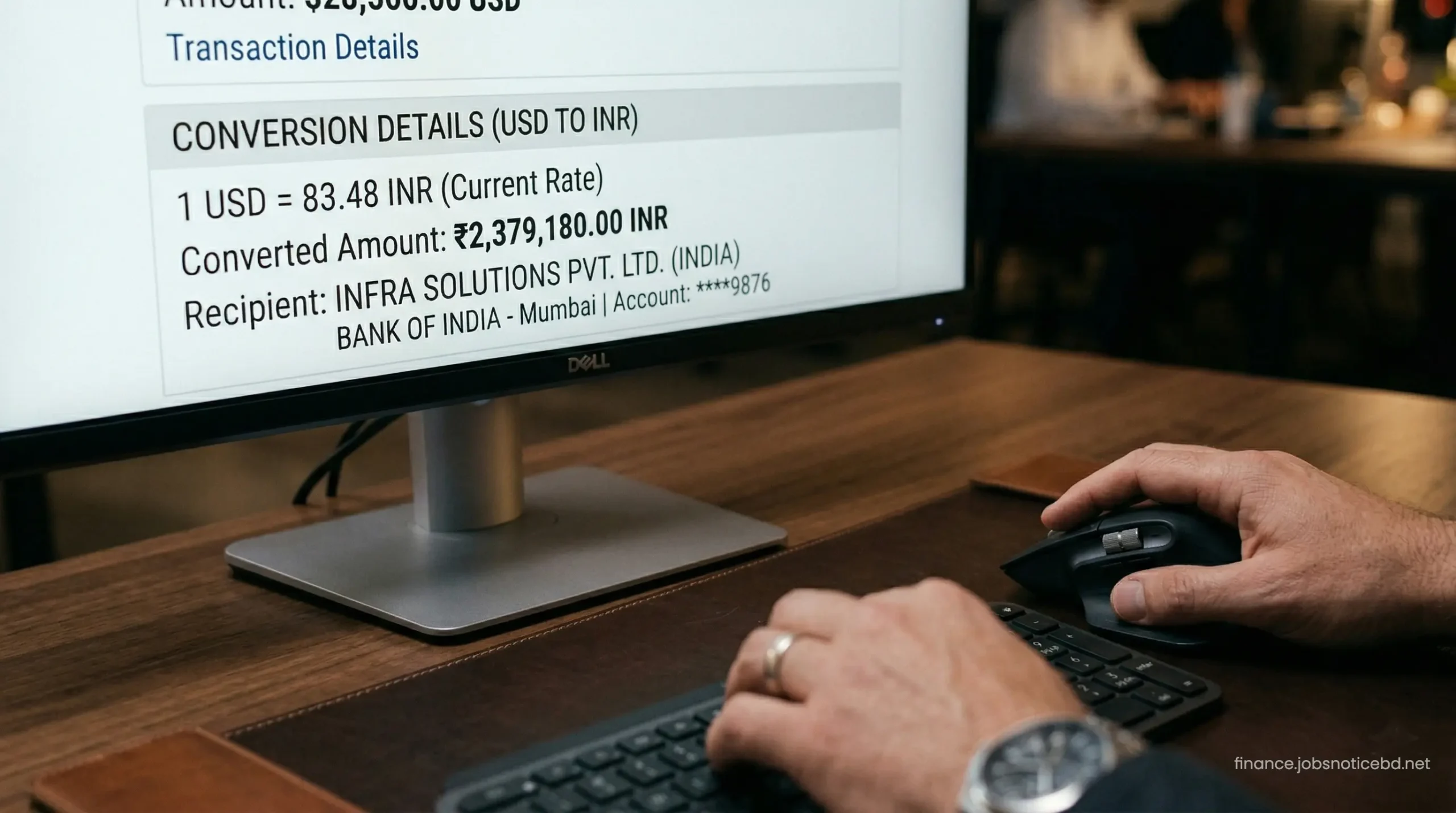
For Indian travelers, executing a standard domestic Electronic Funds Transfer (NEFT or RTGS via your mobile banking app) is the most financially efficient method. When you select this option on the payment page, the system generates a unique, one-time virtual account number specifically assigned to your application profile.
You must log into your standard Indian banking app, add this unique virtual account number as a new beneficiary, and transfer the exact INR amount requested. Because this is a domestic transfer within India, it completely circumvents the Visa/Mastercard international payment gateways.
As detailed in our ultimate guide to forex cards, minimizing international gateway usage is crucial. By utilizing NEFT, you pay zero forex markup, zero cross-currency surcharges, and zero international processing fees. The only minor drawback is that NEFT payments typically take up to 2 to 4 hours to reflect on the embassy’s portal during regular banking hours.
Method 2: The Credit Card Forex Trap
Many travelers prefer the immediate gratification of paying with a credit card. If you choose to pay the US visa fee online using an Indian credit or debit card, the transaction is often routed through an international acquiring bank. This is where the financial leakage occurs.
Even though the transaction amount is displayed in INR, your bank may recognize the merchant as a foreign entity. This immediately triggers the predatory foreign transaction fees we exposed in our breakdown of hidden forex markup charges. A standard card will slap a 3.5% fee plus 18% GST on top of the already inflated consular exchange rate.
| Visa Payment Method | Estimated Processing Time | Hidden Bank Surcharges |
|---|---|---|
| NEFT / RTGS Transfer | 2 to 4 Business Hours | ₹0 (Zero Markup) |
| Standard Indian Credit Card | Instant (Usually) | ~4.13% (Markup + GST) |
| Over-the-Counter Cash (Citi/Axis) | Next Business Day | ₹0 (Zero Markup) |
| Zero Forex Travel Card | Instant | ₹0 (No bank markup) |
If you absolutely must use a card to expedite the scheduling process, you must utilize specialized plastic. Using an elite card like the Niyo Global or HDFC Regalia—which we heavily analyzed in our quest for the best travel card for Dubai and beyond—ensures that you pay zero bank-side markup on the transaction.

Method 3: Over-The-Counter Cash Payments
For individuals who do not possess internet banking or simply prefer offline transactions, the US Embassy allows over-the-counter cash payments at designated branches of Citibank and Axis Bank across India.
To execute this, you must generate a CGI Federal “Cash Collection Slip” from the online portal, print it out, and physically carry it to the bank branch along with the exact INR cash amount. The bank teller will process the payment and stamp your slip. This method incurs absolutely zero bank fees or markup charges.
However, the primary disadvantage of cash payments is the severe processing delay. Unlike a quick digital NEFT, it typically takes a full 24 to 48 hours for the physical bank receipt to be reconciled with the CGI Federal digital system, forcing you to wait two days before you can log back in and schedule your visa appointment.
💎 Mizanur’s Pro Finance Hack
If you choose the NEFT route, do not panic if the portal does not update instantly. The biggest mistake travelers make is assuming the payment failed and making a secondary duplicate transfer. The embassy explicitly states that visa fees are strictly non-refundable. Execute the NEFT once, save your bank’s UTR (Unique Transaction Reference) number, and patiently wait 3 to 4 hours. The portal will automatically unlock the scheduling calendar once the funds settle.
Handling Corporate Visa Expenses
Business owners sending employees to the US for B1 (Business) visas face multiplied costs. Paying for five employee visas using a standard corporate card can leak thousands of rupees into unnecessary exchange spread fees.
Companies must streamline this process by deploying optimized financial instruments. By utilizing the best corporate travel credit cards in India, companies can centralize all embassy payments onto a single statement without suffering the 3.5% foreign transaction penalty on every single employee application.

Alternatively, the company’s finance department can process a bulk NEFT transfer using the unique virtual accounts generated for each employee profile. This guarantees perfect accounting reconciliation and zero currency conversion leakage for the corporate travel budget.
The Impact of Consular Exchange Rate Volatility
It is vital to understand that the embassy’s consular exchange rate is not static; it is highly volatile and frequently adjusted based on macroeconomic conditions. If the Indian Rupee depreciates sharply against the US Dollar, the embassy will update their INR fee structure.
| Visa Fee Base Value | Hypothetical Consular Rate | Exact INR Required |
|---|---|---|
| $185 (B1/B2 Visa) | ₹83.00 per USD | ₹15,355 |
| $185 (B1/B2 Visa) | ₹84.50 per USD | ₹15,633 |
The CGI Federal portal locks in your specific INR payment amount the moment you generate your payment slip. You generally have a small window (often 24 to 48 hours) to execute the payment before that slip expires. If you attempt to transfer the funds using an expired slip, the payment will fail, and recovering the funds becomes an administrative nightmare.

Securing Your US Visa Appointment
Every rupee counts when preparing for international travel. The US visa fee is already a significant, non-refundable investment. There is absolutely no justification for inflating that cost further by casually swiping a standard debit card and absorbing predatory bank fees.
By executing an NEFT transfer or utilizing a premium zero forex markup credit card, you protect your capital and maintain strict control over your travel budget. Master these financial logistics early. Once your payment receipt activates smoothly without hidden surcharges, you can focus entirely on the ultimate goal: securing your visa interview date and planning your American journey.
Frequently Asked Questions (FAQ)
1. Why is the US Visa fee in INR higher than the live Google exchange rate?
The US Embassy uses a “Consular Exchange Rate,” which is intentionally set slightly higher than the live interbank market rate. This acts as a buffer to protect the embassy from sudden currency fluctuations between the time you pay and the time the funds are formally processed in USD.
2. Can I use UPI or GPay to pay the US Visa fee?
Currently, direct UPI payments (like scanning a QR code) are not universally integrated into the primary CGI Federal payment gateway. However, you can use your UPI app to execute an NEFT/IMPS transfer to the unique virtual account number generated by the portal.
3. My NEFT transfer was successful, but the portal still asks for payment. What do I do?
Do not make a second payment. NEFT transfers are not instantaneous on the embassy portal. It typically takes 2 to 4 business hours during Indian banking hours for the system to reconcile the transaction. Log out, wait a few hours, and log back in; the receipt number will automatically populate.
4. Are US Visa fees refundable if my visa is rejected?
No. The $185 payment is strictly an application processing fee, not a guarantee of visa issuance. If the consular officer denies your visa application, the fee is entirely non-refundable, and you must pay it again if you decide to reapply in the future.
5. Can someone else pay the visa fee on my behalf?
Yes. The source of the funds does not matter to the embassy. A family member or employer can log into their own banking app and execute the NEFT transfer to your unique virtual account number, or use their own zero-markup credit card on the portal.